


Most advice about building a website assumes you already know what kind of website you need, what tools the industry currently uses, and which decisions matter more than others. If you are a non-technical founder, that assumption is the entire problem. You are not stuck because you cannot drag a button onto a screen. You are stuck because nobody has told you which of the hundred decisions in front of you actually move the needle, and which are noise dressed up as choices.
This guide is the playbook we wish more founders had before they started. It is not a tutorial for any specific tool, and it is not a feature checklist. It is a way of thinking about the decisions that determine whether your website does its job or sits there looking respectable while quietly underperforming. By the end, you should be able to make the calls that matter without needing a developer to translate them for you.
What "Professional" Actually Means in 2026
The word professional has drifted. A decade ago, a professional website meant something custom-coded, slow to build, and expensive to maintain. Today, the bar has moved. A professional website in 2026 is one that:
- Loads quickly on a phone
- Communicates clearly within the first few seconds
- Holds up under scrutiny on trust signals
- Does not break when someone visits it from a tablet or a slow connection in another country
What it does not mean, despite what some platforms still imply, is custom design from scratch, hand-rolled animations, or a homepage that took three months to ship. Those things can be present in a professional website, but they are not what makes it one. Plenty of homemade-looking sites convert better than agency-built showcases, because they are clearer about what they offer and faster to use.
The shift matters because it changes what you should optimize for. The question is no longer "does this look like a real company made it." The question is "does this work for the visitor, on the device they are actually using, in the context they actually arrive in." Almost every other decision in this guide flows from that reframe.
The Four Decisions That Matter Before You Pick a Tool
A common mistake is to start with the tool. You hear that Webflow is powerful, or that Wix is easy, or that a friend uses Squarespace, and you sign up before knowing what you are building. This almost always leads to one of two outcomes: either you spend weeks fighting a tool that is wrong for your use case, or you ship something generic because the tool's templates pulled you toward a default.
Before any of that, four decisions need answers.
Decision 1: What is this website actually for?
Not "for our company." That is too vague to be useful. The website needs a job, and the job needs to be specific enough that you can test whether the site is doing it.
Some examples of jobs a website can have:
- Convince a stranger arriving from a search engine that you are a credible option for the service they need
- Get a freelance client to schedule a discovery call without a back-and-forth email exchange
- Let a course buyer understand the curriculum, see proof of past student outcomes, and complete the purchase
- Establish that your startup is real enough for an investor to take the next meeting
Each of these jobs implies a different structure, different content, and different success metrics. A site built to do all of them at once tends to do none of them well. Pick one primary job, build the site around it, and treat anything else as secondary.
Decision 2: Who is the visitor, and what state are they in?
The visitor is rarely "everyone." If you sell consulting services, your visitor is probably a buyer in a specific role at a specific size of company, arriving with a specific problem. If you teach an online course, your visitor is probably someone who has spent the last week feeling stuck on the thing your course solves. If you run a small business, your visitor might already be in your neighborhood, looking for a phone number.
The state matters as much as the identity. A visitor who clicked a Google ad is different from a visitor who read a referral on a podcast, who is different again from a visitor who landed on your site after a friend texted them a link. The same page rarely serves all three well.
Once you can describe your primary visitor in one sentence, including how they arrived and what they need, the rest of the design becomes much easier. You stop optimizing for an imaginary audience.
Decision 3: What content do you actually have, or can you realistically produce?
This decision kills more website projects than any other, and it almost always gets ignored at the start. Founders pick a beautiful template, fill in placeholder copy, intend to come back to it later, and then never do.
A website is a content product. The design is the frame. If you do not have, or cannot produce within a few weeks, the words and images that will fill that frame, the project will stall. Before picking a tool, get honest about:
- Do you have testimonials, or can you ask for them this week?
- Do you have product screenshots, or photos of your work, that look decent without retouching?
- Can you write the copy yourself, or do you need a writer?
- If your business is service-based, do you have case studies, or even short stories about past projects?
If the answer to most of these is no, the right move is not to pick a fancier builder. The right move is to spend a week gathering content first, then build.
Decision 4: How much will this site need to grow?
A landing page for a single product launch and a multi-page service business website that needs to add new offerings every quarter are different projects. They have different lifespans, different growth patterns, and different tooling needs.
If your site is going to stay roughly the same size for the next year, you can pick a simpler tool and not worry about scalability. If you expect to add a blog, a careers page, multiple service pages, customer stories, and language variants over the next twelve months, your tool needs to handle that without becoming a maintenance burden.
A useful exercise: write down what your site will look like a year from now, in pages. Not features, just pages. If the list is short, optimize for speed of launch. If the list is long, optimize for ease of expansion.
Builder vs Developer vs Agency: A Real Tradeoff
With those four decisions clear, you can finally pick a path. There are essentially three, and most of the confusion about website-building comes from the fact that the marketing of each path makes the others sound worse than they are.
Path 1: A modern website builder
This is what most non-technical founders should choose, and it is what most non-technical founders eventually do choose, often after wasting time on the other two. A builder gives you a visual editor, a library of pre-designed sections, hosting, a domain, and a path from idea to live site that does not require code.
The category itself has split into two flavors worth understanding:
- Drag-and-drop builders give you near-total visual freedom, which sounds good and turns out to be a problem. Total freedom means total responsibility for design decisions you are not equipped to make.
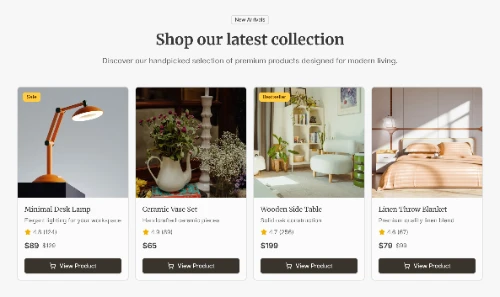
- Block-based builders give you a library of professionally designed sections that you compose into a page. You pick a hero, a feature section, a testimonials block, a pricing table, and so on. The design work is already done. You contribute the content and the choices about which blocks fit your story.
Block-based platforms like Beste are the version of this category that makes sense for most non-technical founders, because they remove the part of the process where you become a part-time designer without meaning to. You still control everything that matters: the words, the structure, the message, the brand. You just do not have to invent the visual grammar from scratch.
The tradeoff is real but minor: you cannot build something that looks fundamentally unlike anything else on the platform. For most businesses, this is a feature, not a bug. The companies that need a fundamentally unique design are the ones that should be on path 2 or path 3.
Path 2: A freelance developer or designer
A freelancer is the right choice when you have a specific design vision that no builder can produce, or when you have ongoing technical needs that go beyond a content website (custom integrations, complex booking systems, unusual data flows).
The cost is meaningful. A capable freelance designer-developer who can ship a small business site costs several thousand dollars, sometimes more, and the timeline is rarely under a month. The other cost, often under-discussed, is dependency: every change to the site goes through them, which means small updates take longer than they should.
Freelancers shine when the work is specific, well-defined, and one-off. They struggle when the relationship turns into ongoing maintenance with no clear scope.
Path 3: An agency
An agency is the right choice when the website is part of a larger brand and marketing system, when you need design and copywriting and strategy together, and when budget is not the primary constraint. A good agency produces work that a builder cannot, and a freelancer would struggle to coordinate.
The cost is much higher than path 2, often by an order of magnitude, and the timeline is longer. The output is usually excellent if the agency is good, and it is usually overkill if you are a small or early-stage business.
The mistake here is hiring an agency too early. Founders sometimes do this because they want the site to feel "real" before they have the customers or content to justify it. The result is a beautiful site that does not perform, because no design budget compensates for the absence of clear positioning and proof.
A simple way to choose
| Situation | Right path |
|---|---|
| Solo founder, service business, less than 10 pages | Modern builder |
| Freelancer with portfolio needs and tight budget | Modern builder |
| Small business needing local presence | Modern builder |
| Course creator or educator | Modern builder |
| Early-stage startup pre-product-market fit | Modern builder |
| Specific custom interactive product on the site | Freelance developer |
| Established brand with ongoing campaign work | Agency |
| Funded company with brand investment thesis | Agency |
The default for most non-technical founders is the first option. The exceptions are real, but they are exceptions.
The Minimum Viable Website
Once you know what you are building and how you are building it, the next question is what actually goes on the site. There is a temptation to build everything at once. Resist it. A minimum viable website has a small set of pages, each doing a specific job, and almost nothing else.
For most service-based businesses and small companies, the list looks like this:
- Homepage, which exists to orient a visitor and route them to the next thing
- About page, which exists to build trust by showing who is behind the work
- Services or product page, which explains exactly what you do and for whom
- Pricing page if your model supports public pricing, otherwise a clear "how to start working with us" page
- Contact page, with a form and at least one alternative way to reach you
- One piece of proof, which can be a case studies page, a testimonials section, or a portfolio depending on your business
That is six pages. Anything beyond this in the first version is usually a distraction. Blogs, careers pages, press pages, multi-language variants, and the rest of the long tail are improvements you can add once the core is doing its job.
A website that does six things well will outperform a website that does sixteen things adequately, every time.
The reason has nothing to do with design philosophy and everything to do with maintenance. Every additional page is something that has to stay up to date. A six-page site can be kept current by one busy person. A twenty-page site cannot, and a stale page is worse than a missing one.
Common Traps Non-Technical Founders Fall Into
Some patterns repeat so often that they are worth naming. If you find yourself doing one of these, it is usually a sign to stop and reset.
Trap 1: Tool research as procrastination
Every week spent comparing builders is a week not spent writing copy or gathering testimonials. The tool decision matters, but it does not matter as much as the content, and at the level most non-technical founders are operating, several tools would work fine. Pick one within a day, not a month.
Trap 2: Designing in the builder before writing the words
It is much easier to pick a hero block when you already know your headline. It is much harder to write a headline when you are staring at a beautiful empty hero asking you to fill it in. Write the words first, in a plain document. Then build.
Trap 3: Copying competitor structure without understanding why
Looking at competitor sites is useful as research and dangerous as a template. Their structure works for their business, their audience, their stage. Copying the structure without understanding the reasoning behind it produces a site that looks like an inferior version of theirs.
Trap 4: Confusing "looks impressive" with "works"
A visitor will not be impressed into buying. They will be convinced. A site that looks plain and answers the visitor's questions in the right order will outperform a site that looks stunning but buries the answer to "what does this actually do" three scrolls down.
Trap 5: Treating launch as the finish line
The website you launch is a draft. You will learn more about how visitors use it in the first three weeks than in the three months you spent planning it. Build a site you can change. Pick a platform that does not punish you for editing. Treat the live site as the start of the work, not the end.
What Each Kind of Founder Should Build Next
The decisions above are universal. The specifics are not. A freelancer's website is a different beast from a startup's, which is different again from an agency's. Once the foundation is clear, the specifics matter.
If you are a freelancer or solopreneur, the question is what to include and what to leave out, because over-built freelancer sites are common and they hurt more than they help. We covered this in detail in what a freelancer website actually needs.
If you run a service-based small business and need to launch quickly, the question is sequencing: what to do first, second, and third when you only have a weekend. Our walkthrough on how to build a service business website in a weekend covers the full sequence.
If you run an agency or studio, the question is different again. Your site is being read by sophisticated clients who have seen a lot of agency sites, and most of what those sites do is performative. We unpacked what clients actually evaluate in the agency website checklist.
If your work is creative, a portfolio site is your main asset, and there are recurring mistakes that quietly cost creatives projects. We documented the most common ones in portfolio website mistakes that cost creatives clients.
If you teach a course or run workshops, your site has a specific job that is closer to a sales page than a brochure, and the structure is different. We walked through it in how to build a course or workshop website without a developer.
If you are an early-stage startup founder, the question is what to launch with and what to defer, because over-investing in the website at the wrong stage is a classic founder mistake. Our piece on what to launch with vs what to add later covers the staged approach.
And if the question on your mind is mostly "what does this actually cost," we wrote a realistic breakdown of website costs in 2026 that compares the three paths above with real numbers.
A Quick Self-Check Before You Start
Before you open any tool or send any brief, run through these questions. If any of them are unclear, the tool will not save you.
- Can you describe the primary job of this website in one sentence?
- Can you describe the primary visitor in one sentence, including how they arrive?
- Do you have, or can you produce within two weeks, the content that needs to fill the site?
- Have you decided which of the three paths (builder, freelancer, agency) fits your situation?
- Have you written down the six core pages and what each one needs to accomplish?
- Do you know what success looks like, in something you can measure?
If you can answer yes to all six, you are ready to build. If not, the gap is where the work is.
A Word on Tooling, Briefly
We have tried to keep this guide tool-agnostic, because the principles outlast any specific platform. That said, tooling does matter, and the gap between a good builder and a frustrating one is bigger than it looks until you have used both.
The builders that work best for non-technical founders share a few traits:
- They handle hosting and performance for you
- They include a custom domain on a reasonable plan
- They treat mobile as a default rather than an afterthought
- They get out of the way once you have made your design decisions
Beste is the builder we work on, and it was designed around these principles, so naturally we recommend it. But the broader point is that the platform should do the boring work invisibly, leaving you to think about the message, the proof, and the visitor.
If you want to skip the tool research entirely, you can start a free site on Beste with a custom domain included on the free plan, and have something live the same day. If you want to see how it compares to the obvious alternatives, the Wix and Webflow breakdowns are honest about the tradeoffs.
The Through-Line
Strip away the specifics and the entire guide reduces to this. A professional website in 2026 is the result of a small number of clear decisions made well, supported by content that says something specific to a specific person, on a platform that does not punish you for shipping early and editing often.
Almost everything else, the choice of font, the precise shade of the call-to-action button, the question of whether to use one slider or two, is noise relative to the four decisions in this guide. Get those right, and the rest of the work is execution. Get those wrong, and no amount of polish will rescue the site.
The next steps depend on who you are. Pick the cluster article that matches your situation, and dig into the specifics there.