

How to Build a Landing Page That Actually Converts
Learn how to build a landing page that converts. Practical guide covering structure, copy, design, and common mistakes. No fluff, just what works.


I have built hundreds of landing pages over the years. For startups, small businesses, freelancers, course creators. Some worked brilliantly. Some flopped. After all that trial and error, I have learned something important: the tool matters less than you think. What matters is getting the page live, testing it, and improving it based on real feedback.
But the tool still matters somewhat. A bad landing page builder wastes your time. A good one gets out of your way. Let me share what I have learned about finding the right one.
What Makes a Landing Page Work
Before talking about tools, let me talk about landing pages themselves. A landing page has one job: get visitors to take one action. Sign up. Buy. Book a call. Download something. One page, one goal.
This sounds simple but most landing pages fail because they try to do too much. Multiple offers. Competing calls to action. Navigation menus that let people wander away. The page becomes a miniature website instead of a focused conversion machine.
The best landing pages share common elements:
- A clear headline that speaks to a specific problem
- A subheadline that hints at the solution
- Social proof showing others trust you
- Benefits explained in simple language
- One obvious call to action repeated throughout
- No distractions, no escape routes
The tool you use should make building these elements easy. If your landing page builder makes you fight for every section, something is wrong.
Can You Create a Landing Page for Free?
Yes. But free comes in different flavors.
Some free tools give you everything you need. Custom domain, professional design, no ugly branding, no page limits. These are rare but they exist.
Most free landing page builders give you something that looks like a demo. No custom domain, so your URL looks like yourpage.toolname.com. Limited pages. Restricted features. The free page announces to visitors that you did not invest in your business.
Here is my rule: if the free tier lets you launch something you would proudly share with potential customers, it is genuinely free. If it makes you look cheap or amateur, you are paying with your credibility.

How to Actually Build Your Landing Page
Let me walk through the process I use. This works regardless of which tool you pick.
Step 1: Start with the offer, not the design.
What exactly are you offering? What problem does it solve? Who is it for? Write this down in plain language before touching any builder. If you cannot explain your offer in two sentences, your landing page will be confusing.
Step 2: Write the copy first.
Headline. Subheadline. Three to five benefit statements. Testimonials or social proof. Call to action text. Write all of this in a simple document before building anything. Design should serve the words, not the other way around.
Step 3: Pick a structure that matches your goal.
For lead generation, you need a form above the fold. For sales, you need more content: problem, solution, proof, offer. For event signups, you need date, time, value proposition, and registration. Different goals need different structures.
Step 4: Build with blocks, not from scratch.
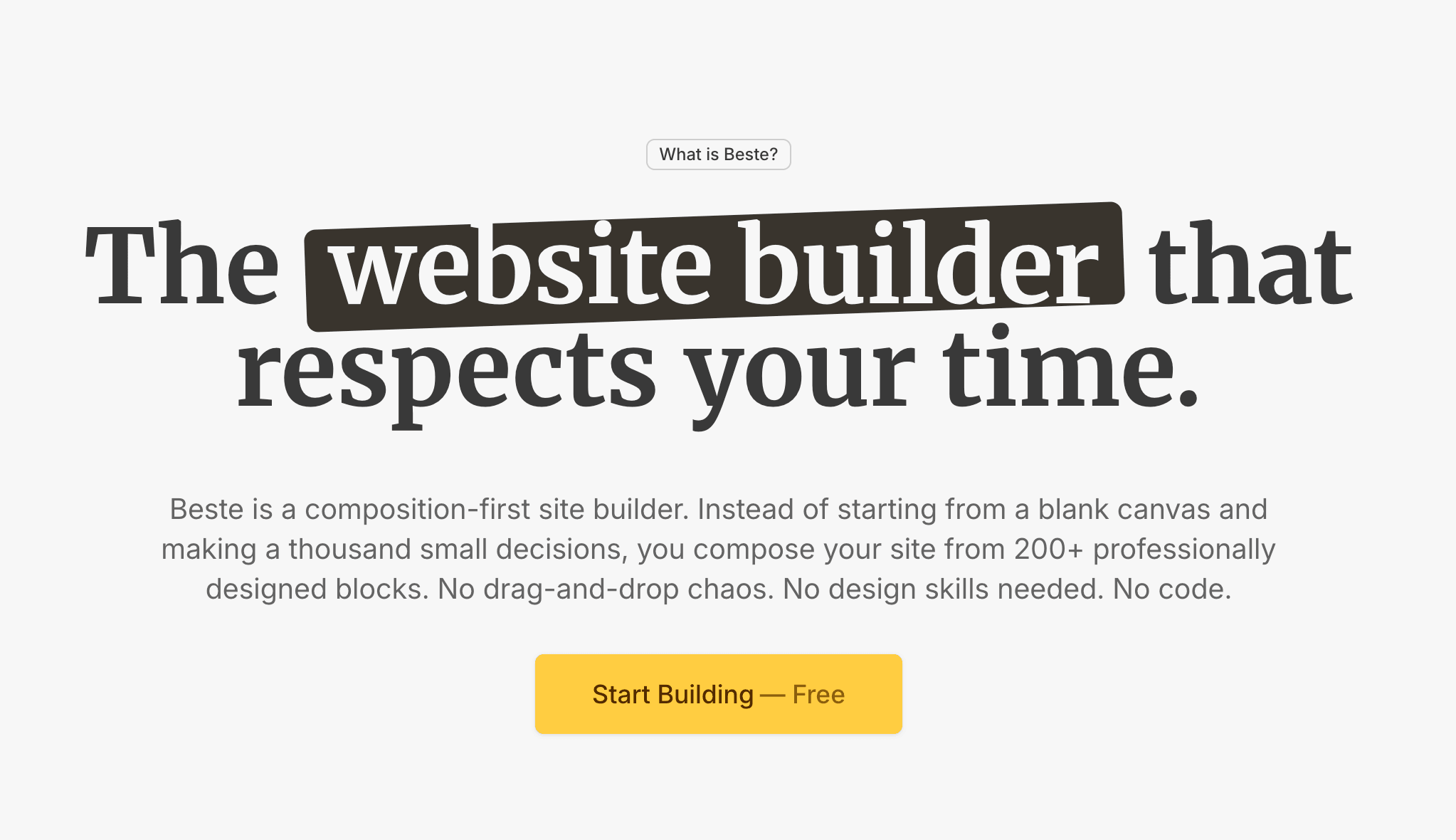
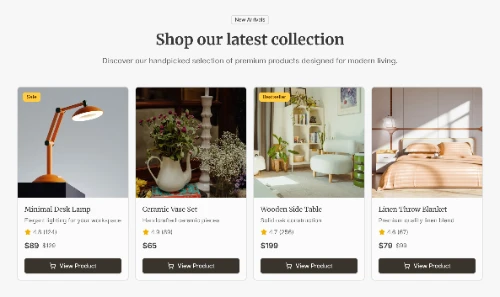
This is where tool choice matters. The best landing page builders give you pre-designed sections that snap together. Hero section, features, testimonials, pricing, FAQ, final call to action. Pick the blocks you need. Add your copy. Done.
Building from a blank canvas takes forever and usually looks worse. Blocks exist because designers already solved the layout problems. Use their work.
Step 5: Remove everything unnecessary.
After building, look at every element and ask: does this help conversion? Navigation menu? Remove it. Secondary offers? Remove them. Anything that does not push toward your one goal? Gone.
Step 6: Launch fast, then improve.
Your first version will not be perfect. That is fine. Get it live. Send traffic. See what happens. The data will tell you what to fix. A live page that converts at 2% beats a perfect page that never launches.

Can AI Create a Landing Page?
This is the question everyone asks now. AI is everywhere. Every tool promises to build your landing page with a simple prompt.
I have tested many of them. Here is the honest answer: AI can help, but it cannot do the job for you.
What AI does well:
- Generate first draft copy based on your input
- Suggest headline variations
- Create placeholder content quickly
- Speed up the starting phase
What AI does poorly:
- Understand your specific audience
- Capture your brand voice
- Know which objections your customers have
- Design layouts that match your exact needs
AI landing page builders give you generic starting points. Every output looks similar because the training data is similar. You describe a SaaS product, you get a SaaS-looking page. You describe a coaching service, you get a coaching-looking page. These templates are fine but they are not tailored.
The real work is still yours. You need to rewrite the AI copy to sound like you. You need to adjust sections to match your actual offer. You need to add real testimonials, real numbers, real proof. The AI gives you a skeleton. You provide the soul.
Some people spend more time fixing AI output than they would spend building from good blocks. The shortcut is not always shorter.
My advice: use AI for brainstorming and first drafts. Do not expect it to understand your business or your customers. That understanding is your job.

What to Look for in a Landing Page Builder
After testing dozens of tools, here is what separates the good from the frustrating:
Speed to launch. Can you have a professional page live in a few hours? Or does the tool require days of learning? The best landing page builder gets you from zero to published fast. Time spent learning the tool is time not spent on your business.
Quality blocks and templates. Pre-designed sections should look professional without tweaking. Good typography. Proper spacing. Responsive by default. If blocks look cheap out of the box, you will spend hours adjusting them.
Simple editing experience. You should not hunt through nested menus to change a headline. Click on something, edit it, done. Complexity in the editor means complexity forever.
Conversion-focused features. Forms that capture leads. Integration with email tools. Analytics to track what works. A/B testing if possible. These features matter for lead generation. Pretty design without conversion tools is just decoration.
Mobile that works automatically. More than half your visitors will come from phones. If you need to manually adjust layouts for mobile, the tool is outdated. Responsive design should be automatic.
Honest free tier or fair pricing. Either give me a free tier that actually works, or charge a reasonable price for real value. The worst tools are expensive and complicated. The best tools are affordable and simple.

Best Options for Different Needs
Let me break this down by situation.
If you need lead generation pages:
Focus on form functionality. Can you customize fields? Does it integrate with your email marketing tool? Can you create thank you pages? The best landing page builder for lead generation makes form creation and lead capture effortless. Pretty design means nothing if leads do not reach your inbox.
If you are testing multiple offers:
Speed matters most. You need to create variations quickly, test them, and kill the losers. Look for tools with fast duplication and easy editing. Do not use complex builders that make every change a project.
If design quality is critical:
Some industries need beautiful pages. Real estate, luxury goods, design services. For these, look for builders with sophisticated templates and strong typography. Block-based tools with design system foundations work best here.
If budget is tight:
Find a genuinely free option that does not embarrass you. Custom domain, professional sections. They exist. A good free landing page builder beats an expensive tool you cannot afford to keep paying for.
If you want AI assistance:
Use AI for copy generation and brainstorming, but pick a builder based on its core functionality, not its AI features. AI is a helper, not a replacement. The builder itself still needs to be good.
Common Mistakes to Avoid
I see the same mistakes repeatedly. Here is what to watch for:
Overbuilding before testing. Your first landing page should be simple. Hero, benefits, proof, CTA. Launch it. Get data. Add complexity only when you know what works.
Choosing tools based on features you will not use. A tool with 500 integrations is useless if you need three. Pick based on what you actually need today, not what you might need someday.
Ignoring mobile experience. Check your page on a real phone. Not the preview in the builder. An actual phone. Tap the buttons. Fill the forms. If anything feels awkward, fix it.
Skipping the thank you page. After someone converts, what happens? A good thank you page confirms the action, sets expectations, and can even offer a secondary conversion. Do not waste this moment.
Never updating after launch. Landing pages should evolve. Test headlines. Try different proof elements. Adjust the offer. The first version is a starting point, not a final product.

The Bottom Line
Building a landing page is not complicated. You need a clear offer, simple copy, professional design, and one obvious call to action. The right tool makes this easy. The wrong tool makes it painful.
Do not overthink the choice. Do not spend weeks comparing features. Pick a builder that feels simple, gives you quality blocks, and lets you launch fast.
The best landing page is not the prettiest. It is the one that converts.
And the only way to find out if your page converts is to launch it. Real visitors, real data, real learning.
"Done is better than perfect. Launched is better than planned."
Stop researching. Start building. Your first landing page is waiting.