


The Website Builder That Gets Out of Your Way
Stop spending weeks learning website builders. A practical guide to choosing tools that launch fast, stay maintainable, and respect your time.

Most website builders promise simplicity but deliver complexity. You start with excitement, then spend weeks learning panels, menus, and settings. Wix gives you 900 templates and 800 apps. Shopify wants you to think about inventory before you have customers. By the time you figure out the tool, you have forgotten why you needed a website in the first place.
Here is what I have learned after years of building sites for clients and myself: the best website builder is the one that lets you launch. Not the one with the most features. Not the one with the biggest marketing budget. The one that gets you from idea to live website without draining your time and motivation.
What Actually Matters When Choosing a Website Builder
Small business owners and freelancers do not need every feature. They need a site that looks professional, loads fast, and stays easy to update. That is it.
Think about what you actually do with a website. You show people what you offer. You give them a way to contact you. Maybe you share some articles or showcase your work. This is not rocket science. The tools should not make it feel like rocket science.
The best website builder platforms understand this. They remove decisions instead of adding them. They give you structure instead of a blank canvas. They respect your time.
Yet the industry went the opposite direction. More options. More settings. More panels. More complexity. Website builders became mini professions. People take courses to learn Webflow. They watch hours of tutorials to understand Wix. They hire specialists to maintain Squarespace sites.
Something went wrong along the way.
Why Blocks Beat Blank Canvases
Here is how most website builder sites work: you get an empty page and a "good luck" from the platform. You drag elements around. You adjust every margin, every padding, every font size. You fight with mobile layouts because elements you placed perfectly on desktop now overlap on phones. Hours pass. Your site still looks off. You are not sure why.
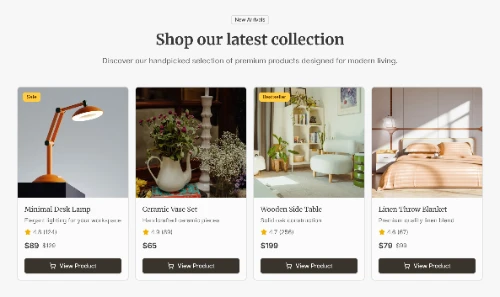
Block-based builders take a different approach. Pre-designed sections that snap together. Hero section, features grid, testimonials, pricing table, call-to-action, footer. Each block is already designed to look good. Typography is balanced. Spacing is right. Responsive behavior is handled.
You just add your content.
"Constraints are not limitations. They are liberations."
This sounds limiting but it is actually freeing. Constraints make you faster. When you do not have to decide every single detail, you focus on what matters: your message, your offering, your business.
Think about Lego. Nobody complains that Lego bricks have fixed shapes. The fixed shapes are what make building possible. You focus on what you are creating, not on manufacturing each brick from scratch.
Good website builders work the same way. The blocks are your bricks. Snap them together. Build something real. Ship it.

The Real Cost of Free Website Builders
Starting with a free plan makes sense. Why pay before you know if something works? Why commit money to something you might abandon next week?
But most free tiers come with catches. Ugly ads plastered across your site. No custom domain, so your address looks like yourname.platformname.com. Limited pages that force upgrades. Restricted features that make professional results impossible.
The "free" becomes expensive in credibility. Your site screams "I did not invest in this." Visitors notice. Trust drops. The free plan ends up costing you customers.
When looking for a free website builder, check for these:
- Custom domain included without hidden fees.
- Unlimited pages so your content can grow
- Real features instead of crippled previews
These options exist. They are rare, but they exist. Finding them saves both money and reputation.
AI Website Builders: Hype vs. Reality
AI-powered website builders are everywhere now. Every platform promotes artificial intelligence like it solves everything. Type a prompt, get a website. Describe your business, watch magic happen.
Sounds amazing. I have tested many of them. Reality is different.
AI generates generic starting points. The outputs look similar because the training data is similar. You still need to customize everything. Change the stock images. Rewrite the placeholder text. Adjust sections that do not fit your business. Fix layouts that almost work but not quite.
The promised shortcut becomes a different kind of work. Instead of building from blocks you chose, you spend time fixing output you did not choose. Sometimes this takes longer than starting with intention.
AI helps with content. Generate a first draft of your about page. Get ideas for headlines. Summarize your services. These uses are genuinely helpful.
AI helps less with design and structure. The visual and organizational decisions still need human judgment. Do not expect magic. Expect a tool that sometimes speeds things up and sometimes creates extra cleanup work.

Easy to Start vs. Simple to Maintain
People want easy. Low friction. Quick start without reading manuals. I get it. Nobody wants to study a tool before using it.
But easy and simple are different things.
"Easy means low friction to start. Simple means low friction forever."
Some platforms are easy to begin but complicated to maintain. The first hour feels great. The first week feels manageable. Then six months later, you need to update your pricing. Or add a new team member. Or change your phone number across the site.
Suddenly you dread touching your own website. You cannot remember how things work. The interface feels foreign again. Changes in one place break things in another place. Designs drift. Fonts become inconsistent. Spacing varies from section to section.
The site that was supposed to serve your business becomes a source of anxiety.
The best website builder for small business is one that stays simple over time. Updates take seconds, not hours. Changes do not cause unexpected problems. Consistency maintains itself. Your site remains yours to manage without fear.
Maintainability matters more than initial ease. Anyone can make the first experience smooth. Few tools keep things smooth for years.
Why Cheap Website Builders Cost More
Saving money matters. Especially when starting a business or launching a side project, every dollar counts. I have been there.
But cheap often means hidden costs. Free domain for the first year, then renewal fees appear. Premium features locked behind upgrades you discover you need after building half your site. Transaction fees on every sale. App subscriptions for basic functionality.
Calculate total cost, not sticker price.
A $0 plan with $15 annual domain fees, $10 monthly app costs, and $6 email charges is not cheaper than a $10 plan with everything included. The math matters. The marketing often hides it.
Also calculate time cost. If a cheap platform takes you 40 hours to learn and build, and your time is worth $50 per hour, that is $2,000 in time. A platform that costs more but takes 4 hours costs $200 in time. The "expensive" option is actually ten times cheaper.
Cheap is not the goal. Value is the goal. What do you get for what you spend, including your time?

What I Look for in a Website Builder
After building dozens of sites on different platforms, here is my checklist:
Responsive design that works automatically. Your site will be viewed on phones, tablets, laptops, and desktops. You should not manually adjust layouts for every screen size. The tool should handle this. If you see a separate "mobile editor" that requires repositioning elements by hand, that is a red flag.
Maintainability over time. Can you update your site in three days without relearning the tool? Can someone else on your team make changes without training? Will your site stay consistent as you add content? These questions matter more than feature lists.
Honest free tier. Custom domain without fees. No embarrassing limitations that force upgrades before you launch. A free tier should let you build something you are proud to share.
Speed in two senses. Your learning speed: how fast can you go from zero to launched? Your site loading speed: how fast do pages appear for visitors? Both matter for success.
Integrations that matter. Analytics to understand visitors. Forms to capture leads. Basic SEO tools to help people find you. These are essential. You do not need 800 apps. You need the right five or six tools connected properly.
Design consistency. Do different sections look like they belong together? Can you accidentally create visual chaos? Good tools prevent mistakes. They guide you toward good results even when you do not know design principles.

Picking the Right Platform for You
The website builder market is crowded. Wix, Shopify, Squarespace, Webflow, Framer, and dozens more fight for attention with features, templates, and AI promises. They compete by adding more. More options. More capabilities. More complexity.
Most people do not need more features. They need fewer decisions.
Most people do not need unlimited creative freedom. They need creative guidance.
Most people do not need a tool they can master over months. They need a tool they can use today.
If you are building an online store with complex inventory, Shopify makes sense. If you need complete design control and have weeks to learn, Webflow delivers. If you want everything in one place and do not mind complexity, Wix has you covered.
But if you want a professional site live in hours instead of weeks? If you want something you can maintain yourself without anxiety? If you want results without becoming a web designer?
Look for simplicity. Look for blocks. Look for tools that get out of your way.
"The best website is the one that exists."
Stop comparing feature lists. Start comparing how fast you can ship.
The best website is the one that exists.
Build it.
Launch it.
Move on to what actually matters: your work, your customers, your life.