

What Is a Block-Based Website Builder And Why It Beats Drag-and-Drop
Drag-and-drop builders promise freedom but deliver chaos. Block-based builders flip the script: pick pre-designed sections, customize through a clean sidebar, and publish. No broken layouts, no design skills needed. Here's how block-based building works and why it might be the smarter choice for your next website.


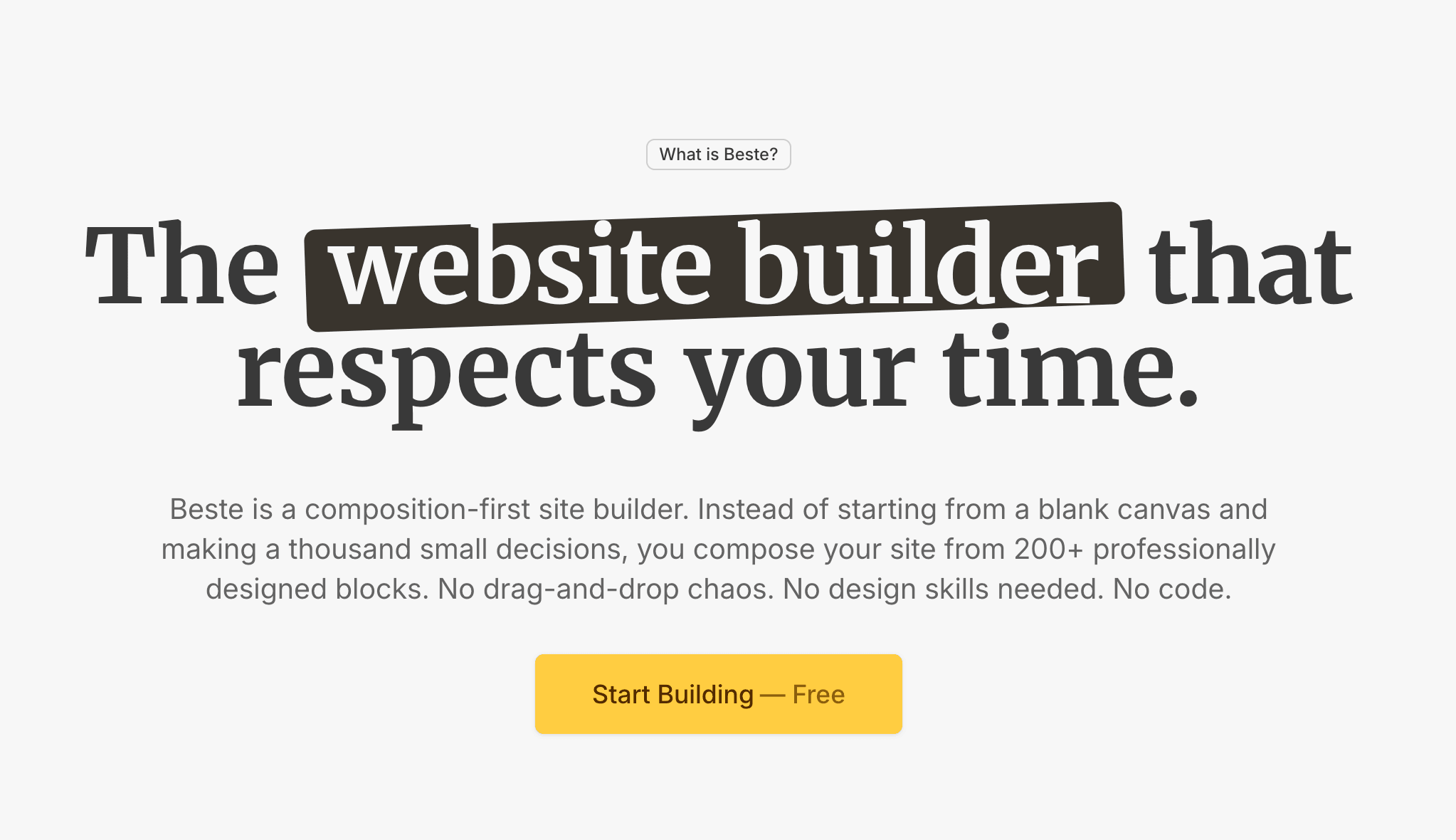
A block-based website builder is a tool that lets you create websites by selecting, stacking, and customizing pre-designed content sections — without dragging elements around a blank canvas or writing any code.
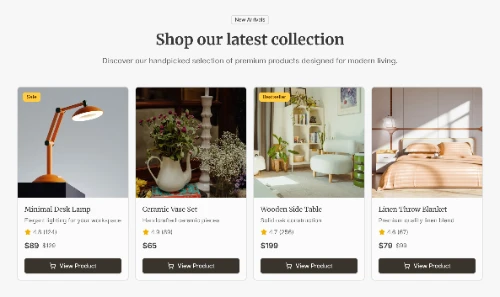
Instead of placing individual text boxes, images, and buttons pixel by pixel, you pick complete sections (a hero, a feature grid, a pricing table, a testimonial slider) and arrange them in order. Each block is already designed to look good, work on mobile, and fit with the blocks above and below it.
Think of it like furnishing a room with curated furniture sets versus building every chair from raw wood. You still control the outcome. You just skip the part where things go wrong.
How Block-Based Builders Actually Work
The process is almost always the same, regardless of which block-based builder you use:
Choose a block. You browse a library of pre-built sections. These are full-width content areas designed for specific purposes: headers, feature lists, pricing tables, FAQ accordions, contact forms, footers, and more.
Customize it. You change the text, swap the images, pick your colors, and adjust settings — usually through a sidebar panel rather than by clicking directly on the page. This keeps the editing experience clean and predictable.
Stack and reorder. Your page is a vertical sequence of blocks. You move them up or down, remove what you do not need, and add new ones whenever your page needs more depth.
Publish. One click. The builder handles hosting, SSL, responsive design, and performance optimization behind the scenes.
That is the entire workflow. No layers to manage, no alignment guides to fight with, no mystery CSS overrides.


Block-Based vs Drag-and-Drop: The Real Difference
Most people assume "website builder" means drag-and-drop. But drag-and-drop is just one approach to building websites visually, and it comes with trade-offs that rarely get discussed.
Here is where the two approaches diverge:
The freedom problem
Drag-and-drop editors give you a blank canvas. You can place anything anywhere. That sounds empowering, but in practice, it creates problems. Elements overlap. Spacing becomes inconsistent. What looks fine on your laptop breaks on a phone screen. You spend more time fixing layout issues than creating content.
Block-based builders constrain your layout intentionally. Every block is designed to be responsive, properly spaced, and visually consistent with its neighbors. You lose the ability to place a button at a random 43-degree angle. You gain a site that actually works.
The maintenance problem
Drag-and-drop sites tend to accumulate what developers call "layout debt." Every manual adjustment — a nudged heading, a resized image, a repositioned button — creates a fragile arrangement that can break when you add new content or change your screen size.
With blocks, maintenance is straightforward. Want to replace your testimonials section? Remove the old block, add the new one. The rest of the page stays intact because each block is self-contained.
The speed problem
Building a page with drag-and-drop typically takes hours of precise positioning. A block-based approach can get you from zero to published in under two hours — including writing your content.

A direct comparison
| Block-Based | Drag-and-Drop | |
|---|---|---|
| Learning curve | Minutes | Hours to days |
| Mobile responsiveness | Automatic | Manual adjustment required |
| Design consistency | Built-in | Depends on user skill |
| Creative freedom | Structured | Unrestricted |
| Typical build time | 1–3 hours | 5–20+ hours |
| Risk of broken layouts | Low | High |
| Best for | Founders, freelancers, small teams | Designers, agencies with specific visions |
Neither approach is universally better. Drag-and-drop is the right choice when you need pixel-perfect creative control and have the design skills (or budget) to use it well. Tools like Webflow and Framer serve that audience excellently.
But if you are a founder, freelancer, or small business owner who needs a professional website without the complexity — a block-based builder will get you there faster, with fewer headaches.
When Does Block-Based Make the Most Sense?
Block-based builders are not for everyone, and being honest about that matters. Here are the situations where blocks genuinely outperform other approaches:
You are launching something new. A startup landing page, a freelance portfolio, a personal site, a side project. You need to be live this week, not next month. Blocks give you speed without sacrificing quality.
You are not a designer. And you should not have to be. Drag-and-drop editors punish people who lack design instincts. Misaligned elements, awkward whitespace, and broken responsive layouts are all symptoms of a tool that demands skills it was supposed to eliminate.
You manage your own content. If you are updating your site yourself, adding blog posts, editing copy, swapping images, blocks make it nearly impossible to accidentally break your layout.
You need multilingual support. Many block-based builders include built-in translation workflows. You structure your content once, then create translated versions without rebuilding page layouts from scratch.
You value your time more than pixel-perfect control. There is a real cost to spending 15 hours adjusting margins and padding. For most business websites, that time is better spent on content, marketing, or talking to customers.
The Role of Constraints in Good Design
This is the part that most website builder marketing gets wrong. They sell "unlimited freedom" as if that is always a good thing.
In reality, professional designers have known for decades that constraints produce better outcomes. Grid systems, type scales, spacing tokens, and component libraries all exist because unrestricted design leads to chaos.
Block-based builders apply this principle at the page level. When your hero section, feature grid, and pricing table all follow the same design language, your site looks cohesive — even if you are not a designer.
This is not a limitation. It is a design system that works for you instead of against you.

What to Look for in a Block-Based Builder
Not all block-based builders are equal. Some are overly rigid, offering a handful of generic templates with minimal customization. Others find the right balance between structure and flexibility. Here is what separates a good one from a mediocre one:
Block variety. A builder with 20 blocks will feel limiting fast. Look for libraries with 100+ sections covering every standard page pattern: heroes, features, pricing, testimonials, FAQs, CTAs, team sections, blog layouts, footers, and more.
Customization depth. You should be able to change colors, typography, images, and content without touching code — but through a clean panel, not through inline editing that breaks when you click the wrong spot.
Responsive by default. Every block should look good on desktop, tablet, and mobile without any manual adjustments from you.
Built-in essentials. A blog engine, form handling, SEO controls, analytics integration, and custom domain support should come standard. If you need five third-party tools to run a basic website, the builder is incomplete.
Speed and hosting. Your site should load fast everywhere. Look for builders that deploy to edge networks (like Vercel) rather than shared hosting servers.
No lock-in traps. Can you connect your own domain? Can you export your content? Does the free plan actually let you launch a real site? These questions matter.
Where Beste Fits In
Beste is a block-based website builder built on shadcn/ui — an open-source component system used by thousands of developers. That means the blocks you use are not proprietary widgets held together by duct tape. They are built on the same design foundations used by professional product teams.
Here is what makes Beste different from other block-based builders:
300+ professionally designed blocks. Heroes, features, pricing tables, testimonial sections, FAQs, contact forms, blog layouts, and more. Each one is designed to work with every other block in the library.
Sidebar-based editing. You never edit directly on the page. No accidental clicks, no broken formatting. Change text, swap images, and adjust settings from a clean panel on the side.
Free custom domain. Most builders charge extra for this. Beste includes it on the free plan.
Multi-language support for 32 languages. Built in, not bolted on.
Hosted on Vercel's edge network. Free SSL, free CDN, fast load times worldwide.
Built-in blog, forms, and analytics integrations. Google Analytics, Meta Pixel, PostHog, Intercom, and more — all included without plugins.
You can go from zero to published website in a single afternoon. No design experience needed. No code required.