

How to Choose a Website Builder in 2026: An Honest Decision Framework
Stop reading feature lists. Here's a practical framework for choosing a website builder in 2026 — based on how you actually work, not what platforms advertise.


Most articles that promise to help you choose a website builder give you a ranked list. Number one is whatever platform pays the highest affiliate commission. Number two is the same platform with different words. By number five you have stopped reading.
This is not that article.
After watching hundreds of people try to pick a website builder — founders, freelancers, small business owners, agency leads — we have noticed that the problem is almost never a lack of options. There are too many options. The problem is that most people do not know which question they are actually trying to answer.
So instead of ranking platforms, this guide helps you figure out what to ask. You will learn which trade-offs matter, which ones are marketing noise, and how to match a builder to the way you actually work. By the end, you will know which category of tool fits your situation — and from there the specific choice becomes obvious.
Why "Best Website Builder" Is the Wrong Question
Walk into a hardware store and ask "what is the best tool?" You will get a confused look. A hammer is not better than a screwdriver. They do different jobs.
Website builders are the same. A platform that is perfect for a restaurant owner launching a one-page menu site is wrong for a SaaS founder who needs a marketing site with a blog, multi-language support, and custom domain routing. A tool designed for agencies managing fifty client sites is overkill for someone building a personal portfolio.
"Best" only exists once you know the job.
The good news: most people fall into one of four situations. Once you identify yours, the choice narrows from twenty platforms to three or four, and from there to one.
The Four Situations (Pick Yours)
Situation 1: You need a professional site, fast, and you are not technical
You are a founder, freelancer, small business owner, or creator. You have a product, a service, or a portfolio to put online. You are not going to learn CSS. You are not going to prompt an AI for three hours to get a hero section that almost works. You want to publish something that looks good this week.
What matters: speed to launch, how good the defaults look, how easy it is to change things later, whether you can use your own domain.
What does not matter: pixel-level design control, obscure integrations, complex CMS schemas, advanced animation timelines.
Situation 2: You need full creative control and you have design skills (or budget)
You are a designer, a design-led agency, or you have hired one. Every detail of the brand matters. You need unusual layouts, custom animations, bespoke interactions. You are willing to invest weeks into getting it exactly right.
What matters: design flexibility, canvas-level control, animation capability, code export, team collaboration features.
What does not matter: launch speed (you are building a showpiece), block libraries (you are not composing from presets), pricing (you are billing a client).
Situation 3: You are a developer who just needs a marketing site
You can code. You could build the site from scratch in Next.js. But you are shipping a product, not a marketing site, and you want to spend zero cycles on the landing page if you can help it.
What matters: code ownership, ability to escape into code when you need to, clean output, fast performance, no vendor lock-in.
What does not matter: visual editors, tutorial content, drag-and-drop anything. You just want something that works and gets out of your way.
Situation 4: You run an agency building sites for clients
You deliver multiple sites per year. Margin matters. Client handoff matters. White-label matters. You are not choosing a tool for yourself — you are choosing an assembly line.
What matters: per-site cost at scale, white-label capability, client editing experience, speed of delivery, ease of handoff, maintenance burden after delivery.
What does not matter: free plans (you bill clients), beginner-friendly tutorials, template quantity beyond a useful minimum.
If none of these fit exactly, pick the one that is closest. Most people are clearly one of these.

The Six Questions That Actually Matter
Once you know your situation, ask these six questions about any builder you consider. Ignore everything else.
1. How long to first publish?
From sign-up to a live, presentable page. Measure in hours, not days or weeks.
- Hours: the builder has you pick from pre-designed sections, fill in text, click publish. This is the block-based approach we cover in What Is a Block-Based Website Builder.
- Days: drag-and-drop builders with templates. You spend the first day learning the editor, the second fighting mobile views.
- Weeks: canvas-based builders like Webflow and Framer. Powerful, but the learning curve is real.
There is no right answer. A founder validating an idea in two weeks cannot afford a builder that takes two weeks to learn. A brand building a showpiece cannot afford a builder that limits their creativity in three hours.
2. What happens when you want to change one thing?
Every builder looks good in a demo. The test is what happens six months later when you need to change something.
The signals to look for:
- Good: changes happen in a predictable place (a sidebar, a settings panel), you see them instantly, nothing else breaks.
- Warning: you have to hunt through nested panels. Some changes require editing multiple pages. Mobile view needs a separate round of fixes.
- Red flag: you need to open documentation to remember how to change a color.
This is where the drag-and-drop-versus-block debate actually matters in practice. Drag-and-drop gives you infinite freedom on day one and infinite fragility on day one hundred. Blocks give you less freedom on day one and far less work on day one hundred.
3. Can you use your own domain?
Many "free" website builders do not let you connect a custom domain on the free plan. Your site lives at yourname.platform.com, which is fine for a draft but unprofessional for a business. If the builder offers a custom domain only on paid plans, factor that cost in — and check our breakdown in Free Website Builder with Custom Domain: What to Actually Look For.
Also check: if you leave the platform, can you take the domain with you? The answer should always be yes. The domain belongs to you. The platform is a tenant.
Start Building
The best way to test a website builder is to build something real in it. If Beste sounds like a fit for your situation, the free plan includes everything you need to publish a complete site with a custom domain.
4. How does the site actually perform?
Page speed affects both your visitors (who leave slow sites) and your Google rankings. The industry-standard metrics are Core Web Vitals: Largest Contentful Paint, First Input Delay, Cumulative Layout Shift.
You do not need to memorize these. You need to know:
- Does the builder publish to a global CDN? (Not a single server.)
- Is SSL included automatically?
- Does the output use modern image formats (WebP, AVIF)?
- Are pages statically generated or server-rendered, rather than a heavy client-side bundle?
If a platform cannot answer these clearly, assume the answer is no.
5. What is the total cost over three years?
Most comparisons show monthly price. That is misleading. Calculate:
- Monthly plan cost × 36 months
- Plus domain (if not included)
- Plus any add-ons you will realistically need (e-commerce, multi-language, team seats)
- Minus your time saved (or lost) over three years
Some platforms look cheap at $12/month and expensive at $35/month after you add what you actually need. Others include everything on the free tier. The sticker price is the headline, not the story.
6. What is your exit plan?
Nobody wants to think about leaving a tool they are about to adopt. But three-year commitments to any platform can age badly. Ask:
- Can you export your content? Pages, blog posts, media?
- Can you take your SEO equity with you? (Custom domain = yes. Subdomain = no.)
- If the company disappears tomorrow, what do you lose?
A builder that respects your ownership of your own work will answer these openly. A builder that does not will dance around them.
The Five Categories of Website Builders in 2026
With those questions in mind, let's map the landscape. Every builder falls into one of five categories. Each category has a different philosophy about what a website builder should be.
Category A: Drag-and-Drop Legacy Builders (Wix, Squarespace, Weebly, GoDaddy)
These are the builders most people think of when they hear "website builder." You drag elements onto a canvas, resize them, position them. In theory this gives you freedom. In practice it gives you the burden of every design decision.
Strengths: mature, familiar, huge template libraries, beginner-friendly first hour. Weaknesses: mobile editing is often painful (see our breakdown of when to leave Wix), performance often mediocre, export is limited or impossible, lock-in is high. Fits: Situation 1 users who prioritize familiarity over output quality.
Category B: Canvas Builders for Designers (Webflow, Framer)
These tools give you pixel-level control. They are closer to Figma than to Wix. If you know what you are doing, you can build stunning sites. If you do not, you will spend weeks learning and still produce something mediocre.
Strengths: creative ceiling is effectively unlimited, strong animation tools, good code export (Webflow), strong design team appeal. Weaknesses: learning curve measured in weeks, pricing escalates fast at scale, non-designers struggle. Fits: Situation 2 users. Sometimes Situation 4 for design-led agencies.
Category C: Block-Based Builders (Beste, Framer-in-section-mode, some newer tools)
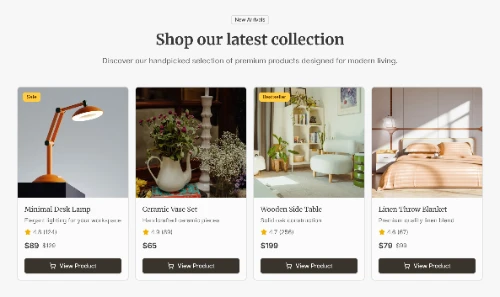
Block-based builders flip the script. Instead of starting from an empty canvas, you compose pages from pre-designed sections: hero, features, pricing, testimonials, FAQ, footer. You pick sections, customize content in a sidebar, publish. The design work is already done; you handle content and brand.
Strengths: fastest time-to-publish (often 2-3 hours for a full landing page), consistent output (all blocks share a design system), very low learning curve, mobile responsiveness is automatic. Weaknesses: less creative freedom than canvas builders, no drag-elements-anywhere flexibility, you are composing within the system the platform defines. Fits: Situation 1 especially, Situation 3 as a fast marketing-site layer, Situation 4 for agencies prioritizing throughput.
Category D: AI Prompt-to-Site Builders (v0, Lovable, Bolt, Framer AI, etc.)
You describe what you want in natural language. The tool generates a site. In 2026 these tools have gotten genuinely good at first drafts but still struggle with the hundredth iteration. The problem is not the AI — it is that websites are the sum of hundreds of small decisions, and explaining each one in prose is slower than clicking.
Strengths: shockingly good initial drafts, great for exploring design directions, low commitment. Weaknesses: iteration gets exponentially harder as the site gets more specific, output quality varies wildly, most users end up editing code manually anyway, long-term maintenance is unclear. Fits: Developers using them as fast scaffolding (Situation 3). Not recommended as a primary tool yet for Situations 1, 2, or 4.
Category E: Traditional CMS Platforms (WordPress, Drupal, Joomla)
Not strictly "builders" but the category too big to ignore. WordPress still powers a huge share of the web. With a page builder plugin (Elementor, Divi, Bricks) it becomes something like Category A.
Strengths: total flexibility, enormous plugin ecosystem, you own your data, no vendor lock-in. Weaknesses: maintenance burden (updates, security, backups), performance requires careful optimization, the "easy" path (Elementor + generic theme) produces generic, slow sites. Fits: content-heavy publishers, users with technical support available, anyone who has specific plugin requirements that cannot be met elsewhere.

Match Your Situation to a Category
| Your situation | Primary fit | Worth considering | Probably not |
|---|---|---|---|
| Non-technical, need to publish fast | Block-based (C) | Drag-and-drop legacy (A) | Canvas (B), CMS (E) |
| Design-led, full creative control | Canvas (B) | Block-based with deep theming (C) | Drag-and-drop (A), AI (D) |
| Developer, just needs a marketing site | Block-based (C) | AI scaffolding (D) | Drag-and-drop (A), Canvas (B) |
| Agency delivering client sites | Block-based (C) | Canvas (B) for design-led agencies | Drag-and-drop (A), AI (D) |
This is opinionated, yes. But after watching the patterns, these matchings are where most people end up after they have tried the alternatives.
The Things Nobody Tells You
Before you commit, a few honest observations that do not appear in marketing pages.
Free plans are marketing, not generosity. The useful features almost always start on paid tiers. Read the fine print about custom domains, analytics access, and export capability. Our honest guide to free website builders in 2026 covers what each platform actually gives you versus advertises.
Templates are a trap if you use them lazily. Every builder shows beautiful templates in the marketing. Most templates look obviously like templates the moment you fill them with your content. The sites that look custom are either built from block systems (where sections are designed to compose) or by designers who started from a blank canvas.
Mobile editing is almost always worse than the desktop experience. If you only edit on a laptop, check what the mobile preview actually produces. This is where most drag-and-drop builders visibly struggle — see What Nobody Tells You About Responsive Design.
The platform you choose is the one you will stay on for years. Migration is real work. Between rebuilding pages, re-optimizing SEO, and moving content, switching platforms takes weeks even under good conditions. Choose with a three-year horizon.
Your content matters more than your builder. A mediocre site with sharp copy beats a beautiful site with vague copy. Before you shop for builders, write your headlines. The exercise of writing them will tell you what the site actually needs. Our guide on website copy that converts is a good starting point.
A 10-Minute Decision Process
If you want a concrete next step, this works:
- Write down your situation (one of the four above).
- Answer the six questions honestly, including the three-year cost calculation.
- Shortlist two builders in your matching category. Two is enough. More than two creates decision paralysis without adding useful signal.
- Sign up for both free plans. Spend thirty minutes on each.
- Build the same thing on both — just a hero section and one content block with real text, not lorem ipsum. The one that felt less like work is your answer.
This process takes a single afternoon. Most people spend three weeks comparing feature matrices and arrive at a worse answer. The hands-on test is honest in a way feature lists are not.
Where Beste Fits
Since you are reading this on Beste's blog, you deserve an honest disclosure about where we fit.
Beste is a Category C builder — block-based, composition-first, built on the shadcn/ui ecosystem. We fit Situations 1, 3, and 4 well. We do not fit Situation 2 — if you need pixel-level control for a design showcase, Webflow or Framer will serve you better.
Our opinionated position: for most people, most of the time, composition-first is faster and produces better output than infinite-freedom drag-and-drop. If that matches how you want to work, try the free plan and build a landing page in an afternoon. If it does not match, one of the other categories will.
The goal of this guide was never to sell you on a specific platform. It was to make sure you pick the right category — because once you pick the category, the specific tool almost chooses itself.